

MAY 1, 2026 FATHER MICHAEL COUTTS
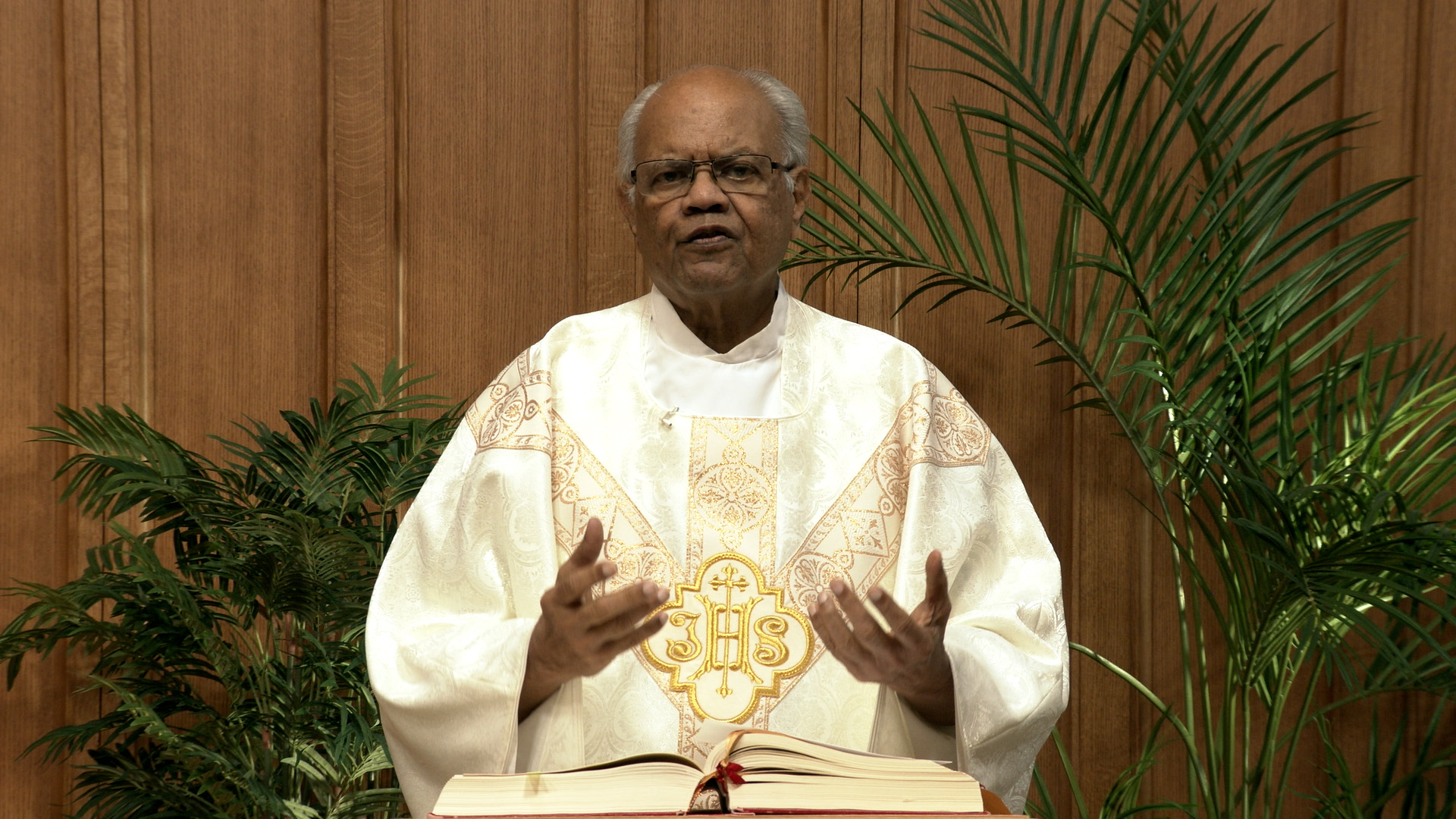
Today we celebrate the Feast of St. Joseph the Worker. It was a feast instituted by Pope Pius XII in 1955. He chose this feast as a sign of contradiction to the glorified Marxist ideology and Communism that was at the centre of the May Day parades.
So, where was the clash? In the book of Genesis, we read, “On the seventh day, God rested.” For six days we read the work of God. Each day ends with, “God saw that it was good.” If we bypass evolution and God’s involvement for 13 billion years according to the scientists, our world would start with Genesis, with “God saw that it was good.” Work is good, work is holy.
We then see Adam and Eve leaving paradise with the words, “You will earn your bread with the sweat of your brow.” Suddenly, work becomes a chore, work becomes a burden. Work is good and work is holy, but there is another side of this picture because of man’s sin, man’s selfishness, and man’s ego. We see this result through history.
We saw the evils of slavery. Human beings, men and women, were captured and sold like material objects. They were made to work on cotton plantation and other manual labour. A century later, Charles Dickens’ book showed the deplorable conditions — in Britain. There was child labour. The living conditions were unimaginably terrible, and, as a nail into this horrible coffin of situation, we have the utilitarian philosopher Robert Malthus, who thought that the poor were a blight on the community. They should choose to die and decrease the surplus population. This was the height of arrogance and a contempt of one’s human being.
I know that this is an oversimplification, but this bad vision led to human dignity being ignored, led to unsafe working conditions and unsanitary housing arrangements.
In 1891, Pope Leo XIII wrote the encyclical, Rerum Novarum, which advocated a balance between capital and labour, between human des– and it said that human dignity should be preserved, there should be just wages and a right to form unions.
70 years later, Pope Pius XII instituted the Feast of St. Joseph the Worker. The church’s revolutionary theology consecrated work as something good and something holy. It counteracted the secular attitude to work, where results were more important, while persons and their safety counted for nothing.
Work was blessed by God in the narrative from Genesis to explain the creation of our earth and its people. Then, as we read in Hebrews, in the fullness of time, God sent his Son. The Son continued the work of the Father. The Son said, “The Father works and I continue to do the work of my Father.”
During the day, Jesus worked. He proclaimed the kingdom of God. God’s continued creation of the world and keeping us in existence is something that Jesus believed in and we believe in as well. It was in Jesus that we live and move and have our being.
In this way, the revolutionary theology of the church is not separated from its moral theology, not separated from its spiritual theology, not separated from its theology of social justice and truth, not separated from its liturgy, from the way we pray and the way we celebrate the Eucharist. The church touches the very heart of our human way of life, both logically, spiritually, and in practical reality.
The work and the dignity of man and woman cannot and will never be determined in terms of dollars and cents. If we do this, this would create a disaster, not merely morally, but also physically. We would be in a state of chaos and confusion.
Like Joseph, Jesus lived in a working world. Joseph taught him in his carpentry, taught him in his mason work, taught him how to use his hands and to make himself useful in the work and the labour of every day, and, as a result, the teachings of Jesus, the thoughts of Jesus, and, later, his parables would include all types of work.
Works of shepherds and fisherman, works of merchants and farmers, works of servants and stewards. These were not described by name, but rather by the work that they did. However, there are persons in the Bible, in the scriptures, to whom we can put a face. Peter was a fisherman. The centurion who believed and said, “I’m not worthy to have you under my roof.” There was Jairus, who was in charge of the synagogue, and finally, there was Peter’s mother-in-law, who started working immediately after Jesus cured her.
So, we come back to the idea. Work is good, work is holy.
Today, as we celebrate the Feast of St. Joseph the Worker, we pray for the father and the mother who see their children off to school, then drive to work in the office, in banks, and their workplaces to put a roof over their head, food on the table, and clothes that they wear.
Then they come back home, and are involved in cleaning and vacuuming and cooking, in mowing the lawn and weeding and cutting the hedges, and then driving their children to all sorts of classes.
Work is good, work is holy, and they do it with the same subconsciousness of breathing in and breathing out. It is no wonder that Pope Francis said, “It is these working families that transform our world and make history that is yet to be written.” God bless you all.