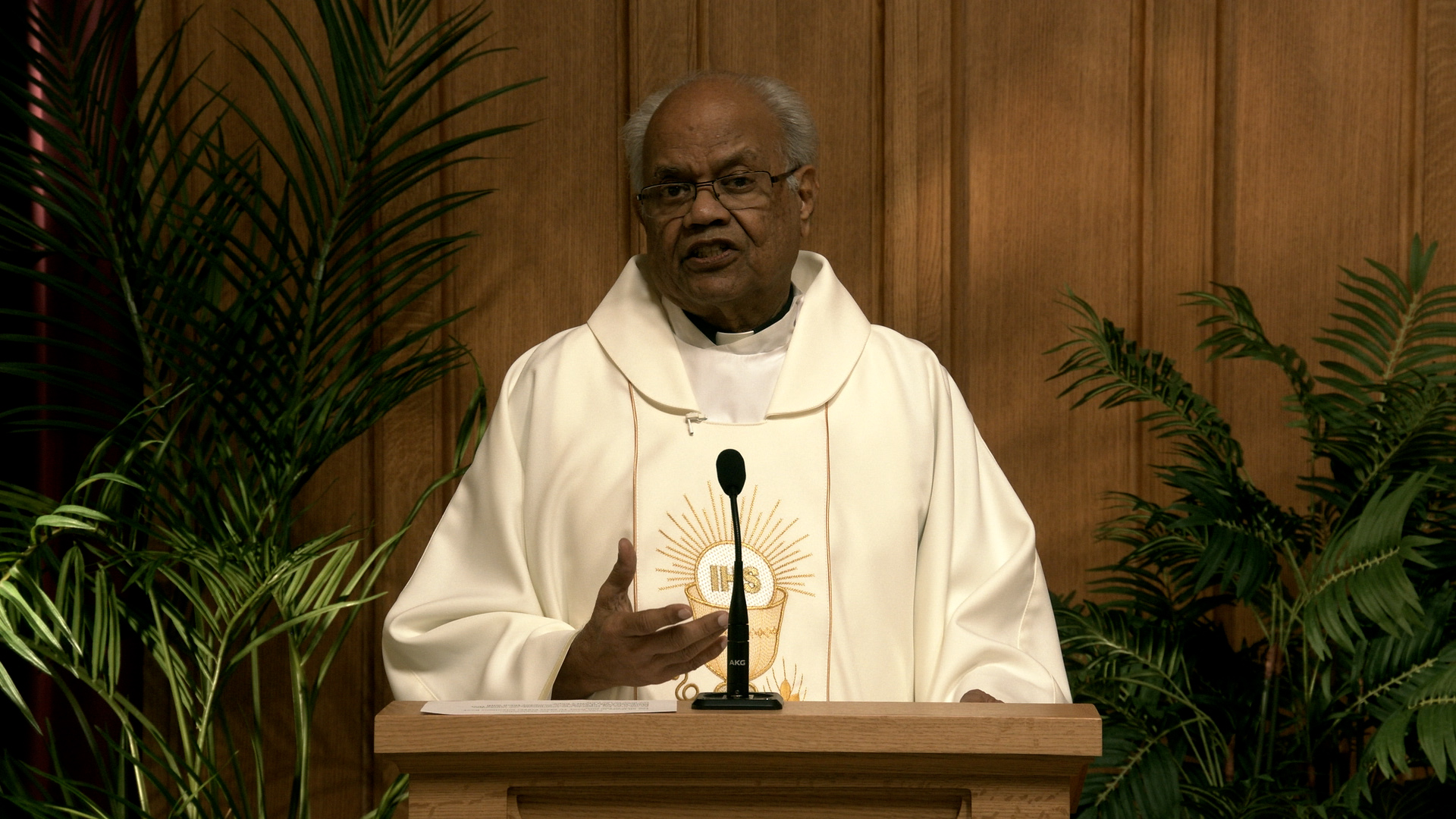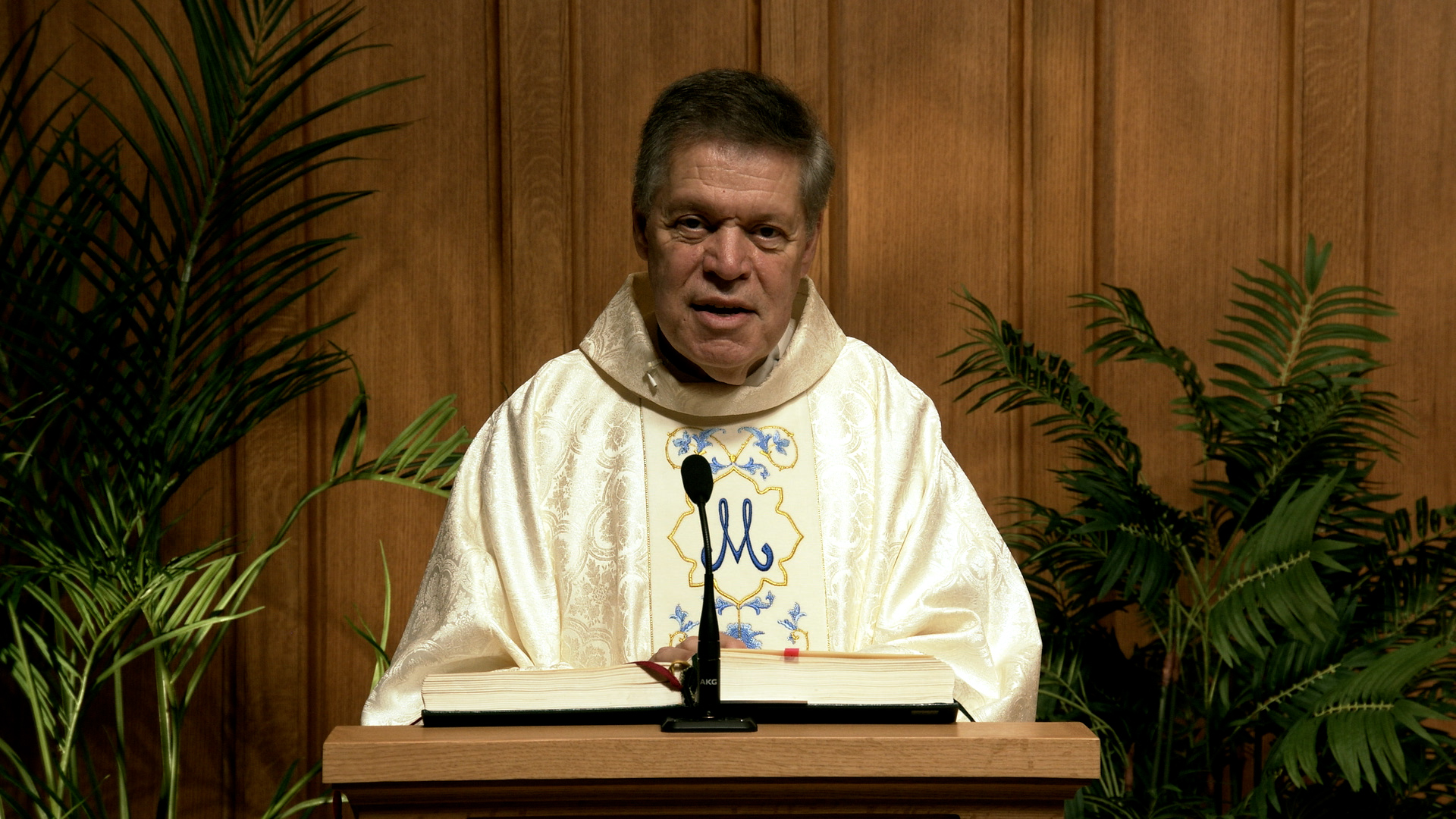

SEPTEMBER 14, 2026 FATHER HENK VAN MEIJEL
On this Feast of the Exaltation of the Cross, we jump right away into the mystery, and in our gospel reading, we have Nicodemus. Nicodemus, who was a Pharisee, but he was not really allowed to come out in public and say, “I believe in Jesus, that Jesus is a prophet and that He’s Son of God.” So, he comes at night and Jesus explains to him that He has come not to condemn the world, that He is the Son of God, and it’s a mystery, of course.
In the first reading of Philippians, we have St. Paul who explains to the Philippians that the mystery of their cross. The mystery that Jesus had to suffer, had to suffer and have to empty Himself, and did not regard Himself as equality with God.
And that’s a great mystery that Jesus did not go around and say, “Here! I am God and I’m special and you’ve got to do this.” But no, He emptied Himself right to giving His own life to us, and that’s a mystery that He died for us, for our sins, and that He give us new life and showed us the way to God through the resurrection, of course.
There’s a whole history there. In the early Church, the cross was something very horrifying, and it still is horrifying, but it was so horrifying that in the early Church, you did not see it. You saw Jesus as the Good Shepherd mainly and so on, but the cross slowly came in there.
And the exaltation of the cross, historically, goes back. The celebration of the cross goes back to the Feast of commemorates the consecration of two basilicas in Jerusalem. One over the believed site of the crucifixion and the other one over the tomb, the burial site of Jesus. And so this happened in 335. So, about 200 years after Christ, 300 years after Christ.
Because starting in 313 with the Edict of Milan, the Christian faith became slowly the faith of the Empire, and Emperor Constantine the Great, he legalized it in the whole empire some years later. And so, tradition has that his mother, Saint Helena, found the actual cross of Christ. It’s tradition, we don’t know if this is true, but that’s the tradition.
St. Marcus, the Bishop of Jerusalem at that time, he oversaw under her direction, the building of the two basilicas. And it is very important, that triumph of the cross. Jesus, who died for us, and it’s a mystery, but it’s so important for us to pray with.
If we cancel, as some people have, and our Muslim sisters and brothers, they don’t recognize the crucifixion of Jesus. For them, Jesus is a prophet. But without the crucifixion and the resurrection, our faith is really just a nice teaching of living a good life. But with the crucifixion and resurrection, it’s much more.
We know Jesus showed a way forward and showed us the way to God. That there is life after death, and it’s so important for us to know and not to be ashamed to be Christians and to accept our crosses. Each one of us has a cross, and it’s so important to accept our crosses.
Each one of us will suffer, and I just have to look at my own life in my deepest suffering about 26 years ago. I did not see the light at the end of the tunnel, but my own crucifixion, so to speak, I did not die on the cross, but my own agony became the greatest gift I received.
As I resurrected, as there was new hope in my life, as I saw the light slowly again, and I saw a new way how God was leading me slowly to the priesthood, and here I am 26 years later. And everything, all my suffering, looking back, all my “crucifixions” have become my gift.
It allows me to be with many people who are struggling and I can relate to the struggles in one way or another. And so, the great lesson for us is to accept our crosses in life.
And so many, of course, in these days, with MAID, with assisted dying, it takes away the cross, but when we can accept our suffering. When we can offer up our suffering and trust that God will bring good out of it. Then, again, the crucifixion, the cross becomes so important for us.
As we say someone with a terminal illness, as they can offer up their suffering with Jesus from the cross for the good of others. It becomes a prayer, it becomes a prayer for those who have gone before us, those who are in purgatory, those who are living and suffering deeply, and so many people, of course, they suffer here on Earth.
Some people will say it is not true, but we have especially in the body of saints, we have so many examples of mystical experiences of how God, Jesus is real. How Jesus has suffered and died for us, and we just have to look at some of the mystics like Sister Faustina, the Divine Mercy, Padre Pio, Catherine of Siena, Gemma Galgani, St. Francis of Assisi, who also several of these had stigmatas.
The wounds of Jesus on the cross. To show us the way, to show us that this is real, to show us that there is life after death, and it invites us to suffer with Jesus. To suffer with Jesus on the cross, and especially when life is not good. Amen.