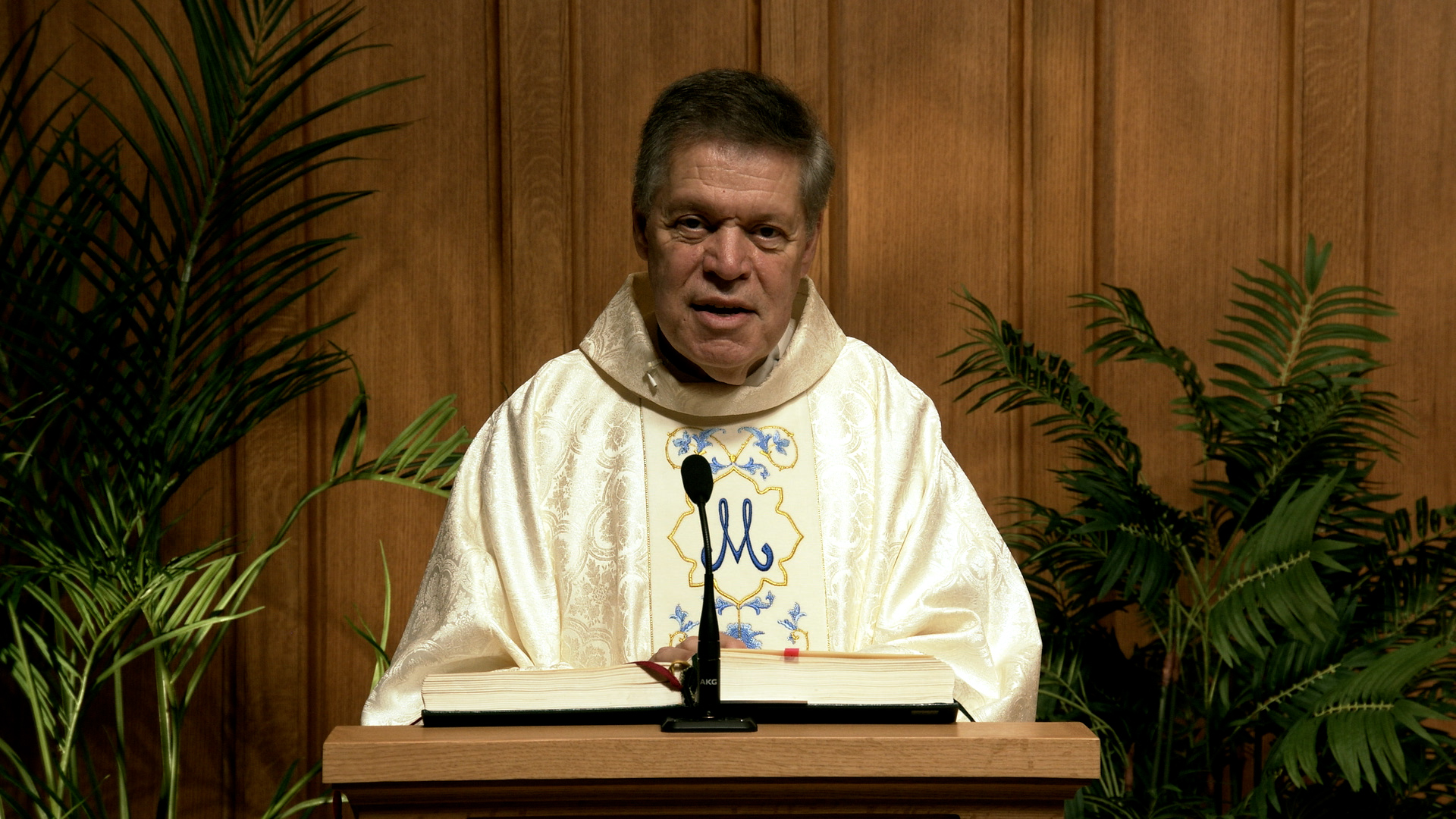


SEPTEMBER 12, 2026 FATHER ERNESTO DE CICCIO
There’s a couple of different messages that we can get from this passage from Luke’s Gospel. The first is this very important line, it is out of the abundance of the heart that the mouth speaks.” We all need to ask ourselves, what is in our heart? Is there good there? Is there love there? Is there faith there? Or do we fill our hearts with all those negative kind of emotions that do harm to ourselves and to everybody else around us? Do we have anger, resentment, jealousy, hatred, rancour? There should be no room for that in our hearts because, when that’s in our hearts, it’s going to come out in what we say and in what we do.
If our heart is full of goodness, and love, and mercy, and peace, and justice– those virtues that come from above– then, it’ll be reflected in our words and in our deeds. So, what’s in our hearts? Hopefully, mostly good. And if there’s something there that shouldn’t be there, then, let’s get rid of it. Let’s fill it in self instead with what is good.
And speaking about hearts, that’s exactly what we need to see in other people as well. Because, too often, we can be so judgmental of others. “I don’t like the way this one looks, “the way this one talks, the way this one dresses.” We even do this when, let’s say our children are dating somebody, and they belong to a different race or a different culture, or speak a different language, or they don’t have the kind of job that my future in-law should have.
The only thing we should be seeing is: do they have good hearts? Good hearts is what matters. Not how they look, not how they dress, not how they talk, not what job they have or how much money they make. Do they have good hearts? Let’s recognize that because good hearts can be found in all the world, including in people who are different from ourselves.
Jesus knew that, of course, and that’s why he was able to welcome all kinds of people– the sinners, the tax collectors, the prostitutes– because he knew that they had fallen, but he also knew that they had hearts and that they were trying to get their hearts in the right place. So, let’s always recognize good hearts in our brothers and sisters.
The second part is when Jesus is challenging the people and saying, “Why do you call me ‘Lord, Lord’?” By the way, Luke’s Gospel is a little bit different from Matthew’s gospel because we find the similar words in that Gospel, and in Matthew’s gospel, Jesus says, “It is not those who say, ‘Lord, Lord’, “who will enter the kingdom of heaven, “but those who do the will of my Father in heaven.”
Doing the will of the Father means building our house on a firm foundation. It’s not enough for us to hear those beautiful words of Jesus, to read our Bible every day, or, for that matter, even go to Mass every day or watch it on TV. It’s about doing God’s will. What good does it do for us if we’re praying all the time and then we’re not being very nice to other people?
Not those who say, “Lord, Lord,” that will get into the kingdom of heaven. “Why do you call me ‘Lord, Lord’ “and do not do what I tell you?” What does Jesus tell us? Love your neighbour. Be merciful. And it should come naturally to us, I’d like to think. It shouldn’t be hard work to be nice. It should be in our blood.
I took a couple of days away a few months ago, and I met a priest who was just getting ready to retire, and we were talking about our ministries as priests. And he shared in the most simple language and said, “You know, I’ve come to believe “that just being kind goes a long way.”
I have to ask myself that as a priest. Am I being kind to the people that I serve? Am I smiling at them and saying “welcome”? Or am I just losing my patience with people, raising my voice, being nasty? It doesn’t just apply to us priests, but every single one of us who says, “Lord, Lord.” We have faith, we pray, we read the Bible, we go to Mass, we receive the sacraments, and that’s all well and good.
But our faith has to express itself in our way of life, in our obedience to Jesus’ command to love our neighbour as ourself. So, then, if we say, “Lord, Lord,” let’s put it into practice. Let’s love everyone because love is the expression of our faith, and we express our love, not by sending roses or chocolates to some of the people, but by our way of life– visiting the sick and lonely, helping those in need, being patient and kind, being willing to forgive even those who have harmed us.
Never enough to say, “Lord, Lord;” let’s show what we believe. Let’s show what we have inside our hearts: the love that God has planted there, the love that we need to share in word and deed with all those whom we encounter.