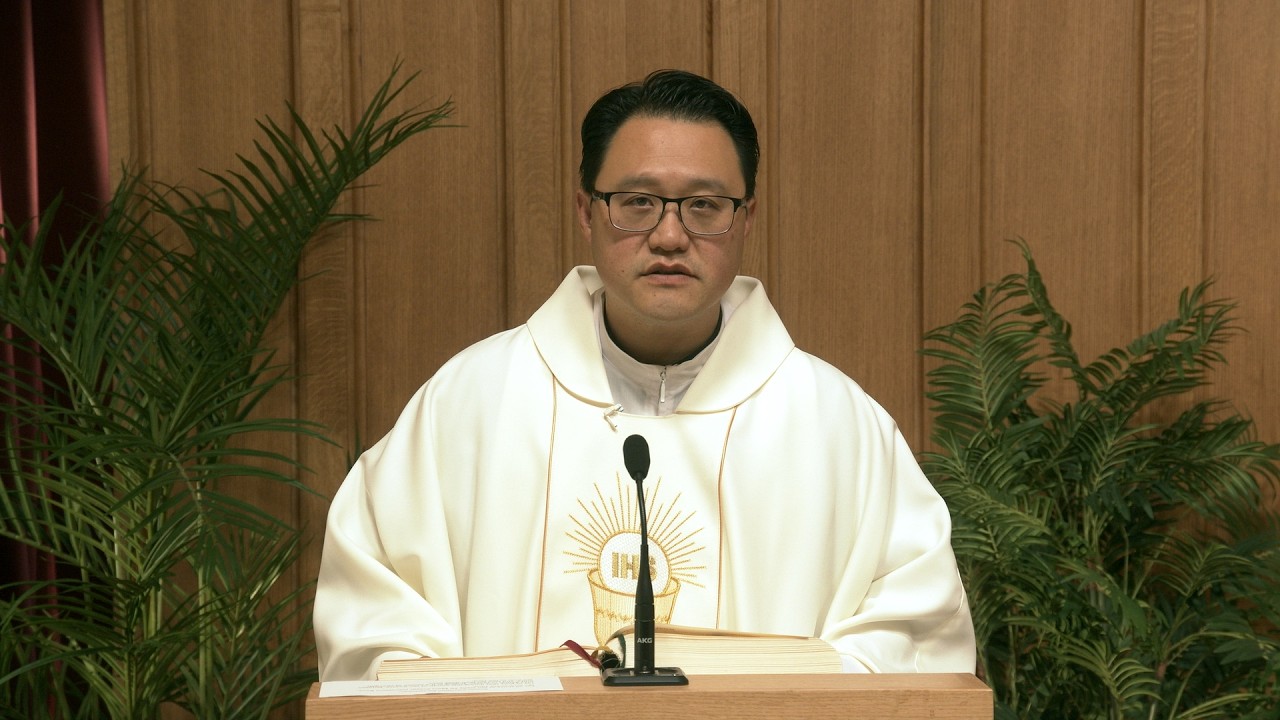


SEPTEMBER 6, 2026 FATHER FRANCIS SALASIAR
A boy once asked his grandfather: “Grandpa, why do you always tell me when I’m doing something wrong? Why can’t you just leave me alone?”
The grandpa smiled, walked into the garden, and gently pointed to an eggplant tied to a small wooden stake.
He said: “Do you know why I tied this plant? Not because I dislike it, but because I want it to grow strong and straight. If I let it grow anyway it wanted one day it might bend, weaken, or even break.”
Then he looked at his grandson, and said: “The people who truly love you are the ones who are enough to correct you. Correction is not the opposite of love, often it is one of the love’s greatest expressions.”
My dear brothers and sisters, that simple lesson captures the heart of this Gospel. Jesus speaks to us about something that has become increasingly difficult in today’s world: The art of loving correction.
We live in a society that values personal freedom, so much that we often hear: “Mind your own business.” Or “Don’t judge me.” As a result, many people stay silent even when they see someone they love making harmful choices. They’re afraid of hurting feelings, or damaging a relationship.
On the other hand, some people do correct. But they do it with anger, sarcasm, or public criticism. Instead of healing relationships they deepen the wounds.
Jesus shows a better way. He says if your brother or sister sins against you, go and point out the fault when the two of you are alone.
Notice what Jesus does not say. He does not say: “Tell everyone.” He does not say: “Complain to your friends.” He certainly does not say: “Post it on social media.” Instead he gives us three simple steps. Go personally, go privately, go lovingly.
The purpose is not to prove that we are right. The purpose is to preserve the relationships. Jesus says if they listen to you, you have regained your brother or sister. What beautiful words. To goal is not to win an argument, but to win back a person.
In every family there are misunderstandings. Brothers and sisters stop speaking over property, or money, or misunderstanding. Husbands and wives carry hurts for years, because neither one takes the first step. Friends slowly drift apart because small misunderstandings are never addressed.
Jesus invites us to take that first step. Notice that he insists on speaking privately. Why? Because every person deserves dignity. Public criticism usually creates embarrassment and defensiveness. A private conversation creates space for listening, understanding, and healing.
Unfortunately, we often do the opposite. We speak about the person instead of speaking to the person. We call relatives, we complain to neighbours, we share our frustrations with our friends, but we never approach the one who needs to hear us. That is gossip, not Gospel.
Jesus asks us to reverse that pattern. Speak to the person first. Speak with humility, speak with love.
Of course this is never easy. It requires humility on both sides. The one offering correction must first examine his or her own heart. Am I speaking because I love this person, or because I want to prove a point?
The one receiving correction also needs humility; the willingness to listen without becoming defensive. None of us enjoys being corrected. Yet every one of us has become a better person because someone cared enough to tell us the truth.
Parents correct their children. Teachers correct their students. Coaches correct their athletes. Doctors sometimes tell us difficult truths because they want us to recover. Correction offered with love helps us to grow.
Jesus concludes today’s Gospel with those familiar words: “Where two or three are gathered in my name, I am there among them.” We often hear these words at prayer meetings, but in today’s Gospel they are spoken in the context of reconciliation.
Jesus is telling us that whenever people come together to forgive, to restore trust, and to heal broken relationships, he himself is present. Every attempt at reconciliation becomes a place where Christ stands in our midst.
So today, let us ask ourselves, Is there someone I need to speak with instead of speaking about? Is there a relationship that needs healing? Is there someone whose loving advice I have refused because of pride?
Dear brothers and sisters, our families and our parish do not need perfect people. They need people who love enough to tell the truth with kindness, to listen with humility, and to forgive with generosity.
May our words never become weapons that wound, but medicines that heal. May our corrections always flow from love. May our forgiveness always restore relationships.