

NOVEMBER 2, 2026 DEACON MIKE WALSH
One of the most difficult moments in my life occurred almost 30 years ago, in July 1997. I had just returned with my son from a wonderful day at the Toronto Indy—a tradition we had begun a few years earlier and continue to this day.
When we walked in after a long day in the sun, I could tell something was not right. My wife quietly took me aside and told me that my younger brother had been found dead in his apartment. He had struggled since a motorcycle accident as a teenager—an accident from which he never fully recovered.
What made that day even more difficult was knowing that I had to tell my mother. When I arrived at her apartment building, she happened to be sitting out front. She was happy to see me, but that joy quickly turned into sorrow as I shared the news that her son had died.
“Blessed are those who mourn, for they will be comforted.” Jesus does not say that those who mourn will not feel sorrow. Christian mourning is real sorrow, not denial. But Jesus promises that sorrow will not have the final word. At that moment, however, I wondered where comfort could come from in the face of such loss.
Some time later, while making a retreat, I wandered into the bookshop of the spirituality centre and came upon a painting called Welcome Home by the artist Danny Hahlbohm. It is a simple image: clouds shaped like two open hands, a dove, and, in the centre, Jesus embracing a figure.
Led by the Holy Spirit, the person is welcomed into the hands of our loving Father and embraced by our brother Jesus. What struck me most was that the person in Christ’s embrace was fully healed of every physical or mental infirmity carried through life. When I shared the image with my mother, we both felt comforted—not simply by the painting, but by the promise of life everlasting.
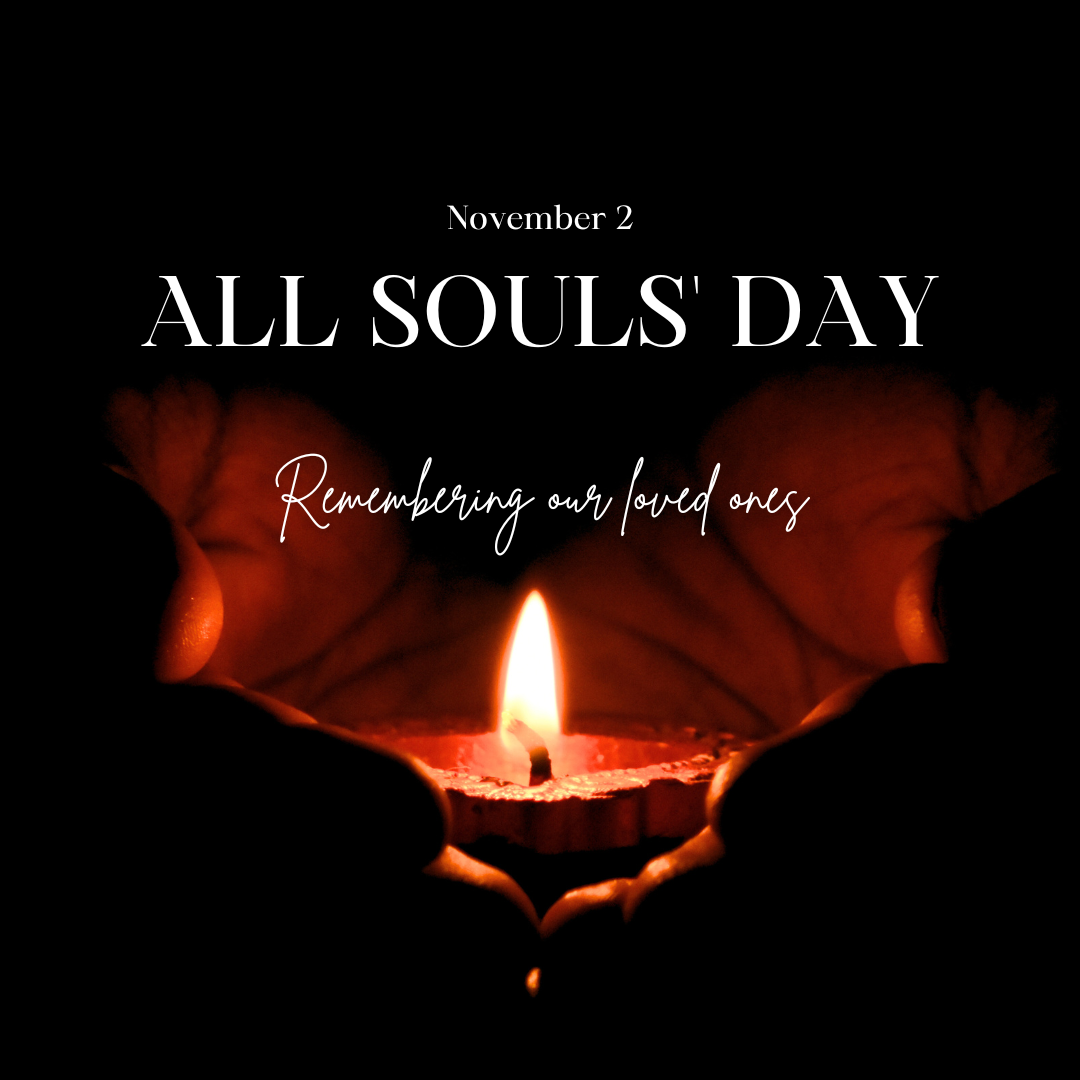
Today, on the Commemoration of All the Faithful Departed, the Church remembers all who have died. Throughout November, the Daily TV Mass community prays in a special way for those we have loved and for the souls in purgatory who may have no one else to pray for them.
If you wish, you may submit the names of loved ones to be included in our Book of Remembrance through our website or by email, as displayed below.
The Church has prayed for the dead since ancient times. All Souls’ Day follows All Saints’ Day as a sign of hope that the faithful departed—including those undergoing purification in purgatory—remain part of the communion of saints. We pray because we entrust them to the mercy of God and proclaim that death does not have the final word.
Why, then, do we pray for the dead?
First—We entrust the dead to God’s mercy and purification. Our prayers are an outward sign of trust that those we love are being guided by the Holy Spirit into the waiting arms of our loving Father and into the embrace of our brother Jesus. We are not trying to hurry God along; we are placing our loved ones in his care.
Second—The Eucharist is the Church’s greatest prayer for the deceased. Pope St. John Paul II reminds us that the souls in purgatory “are helped by the prayers of the faithful and most of all by the acceptable sacrifice of the altar.” At every Mass, we remember those who have gone before us with the sign of faith and rest in the sleep of peace. Our private grief becomes part of the prayer of the entire Body of Christ.
Third—Prayer transforms our mourning into an act of love and hope. While the real feelings of grief may remain we have the opportunity to direct our energy towards hope in the Risen Christ.
This brings us back to trust. We entrust all those we have loved, who have completed the earthly part of their journey, to our loving God. Through our prayers, even while grief and sorrow remain, we begin to glimpse the great hope promised to us at baptism: the promise of life everlasting.
Perhaps this is how the words of Jesus become real for us: “Blessed are those who mourn, for they will be comforted.” The comfort does not erase the loss or remove the memories. It comes through the presence of Christ, through the prayers of the Church, and through the assurance that those we love are held forever in God’s mercy.
In this sure and certain hope, we can continue our own journey—comforted by the Lord and called to glorify him with our lives, even in times of sorrow.
And so, trusting in his promise of life everlasting, Go in Peace.