

OCTOBER 7, 2026 FATHER PETER TURRONE
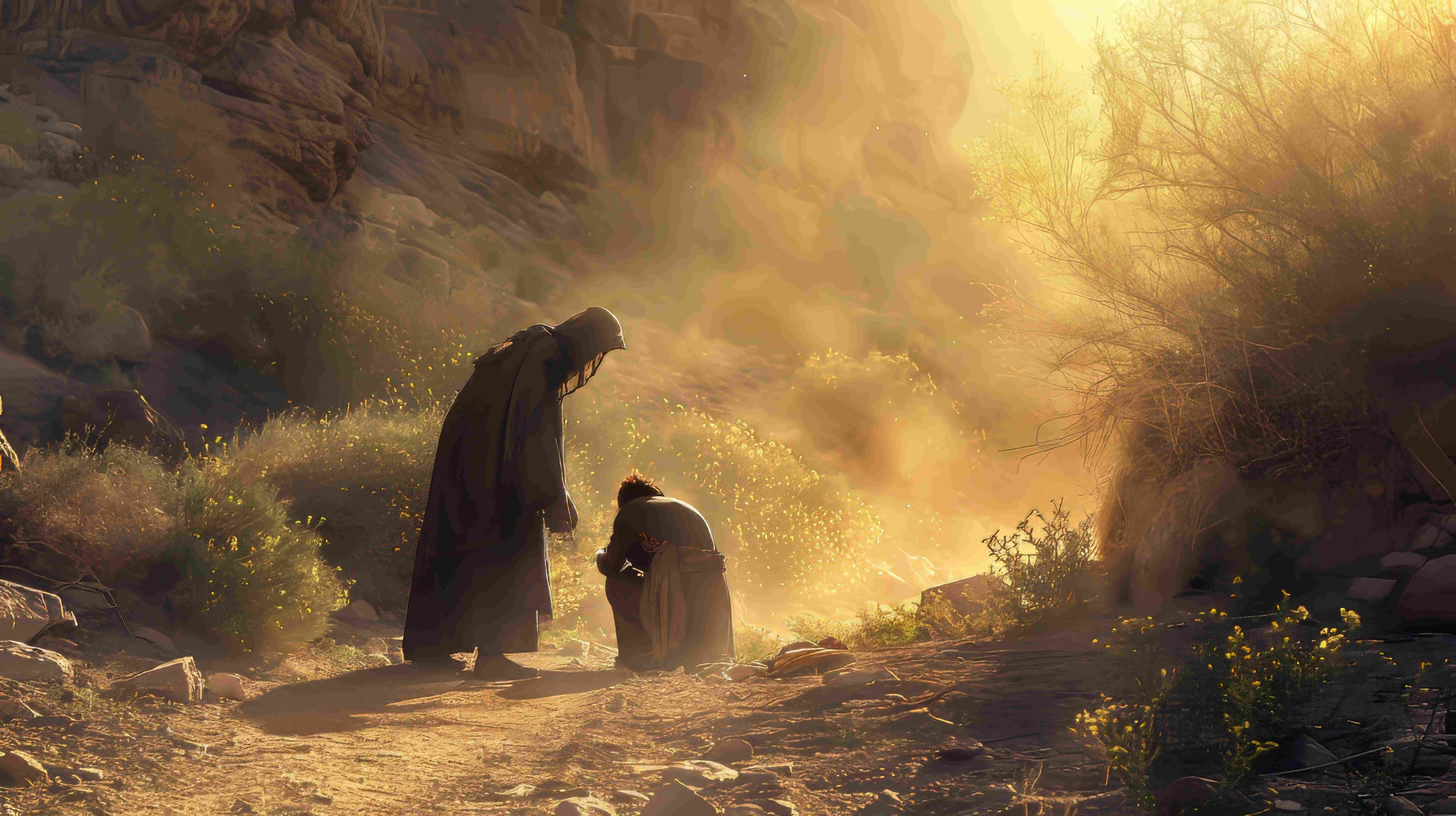
Jesus was praying in a certain place, and after he had finished, one of his disciples said to him, “Lord, teach us to pray as John taught his disciples.” So Christians, from the beginning, have prayed the Our Father. This is the one prayer that Jesus gave to each and every one of us, and this beautiful prayer reminds us that we all share God as a common Father.
When I was reflecting upon this scene where Jesus is praying and the disciples are watching him… So we can see somebody praying, and perhaps we can just look at them and kind of move on. But have you ever had that experience when you’ve seen somebody really, really praying, and you felt like their whole being was involved in what they were doing, that they were communing with God? So, this is what they see. The disciples see Jesus. So, even though he’s in complete and total union with the Father, he is turning to the Father periodically to pray. And he gives them this beautiful prayer as a reminder that God is our Father.
God is our Father. He is holy. We ask that his kingdom be done on earth, that his will be done, that he provides for our daily needs, and in the midst of providing for our daily needs, that we receive what is so important, which is forgiveness for our sins, and the grace to be able to forgive other people; and to ask for strength to be able to be faithful to the will of God as we’ve come to understand in our lives, so that, when temptation comes, which it always will, that God will give us the strength to be able to overcome it and to endure it.
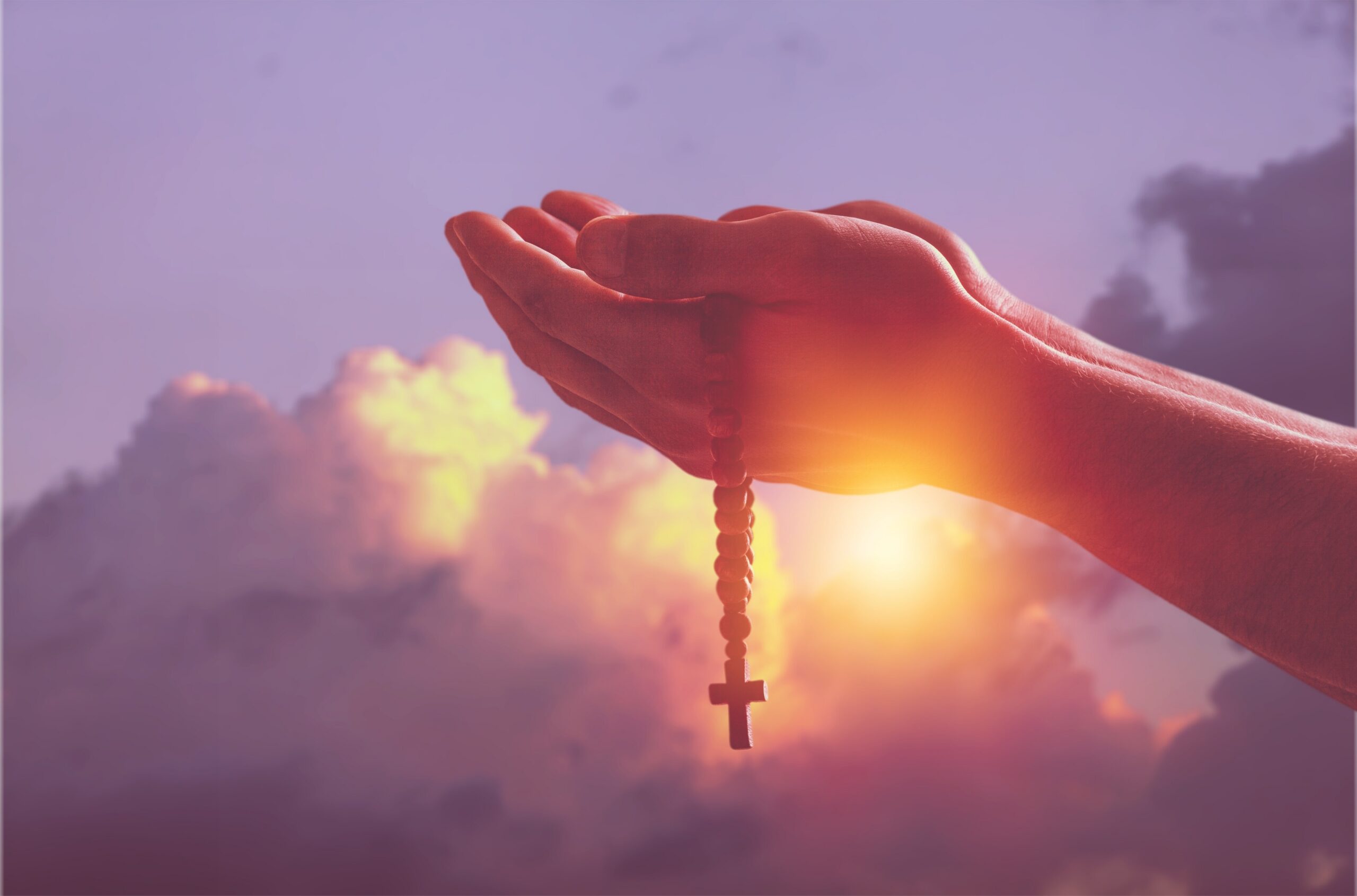
Today is also the memorial of Our Lady of the Holy Rosary. So, many Catholics have rosaries. Oftentimes, they’re hanging in the car, which is fine. You know, they have it there as a reminder, but it’s a really important thing to do is to actually take the rosary and to pray it. Why is that?
Well, first off, the foundational prayer of the rosary is the Apostles’ Creed. So, what we’re doing is we are praying, we are stating our faith, the faith that has been handed on to us by God, given to us through the Apostles. So, that is the foundation of our prayer. And then, we have the Our Father that prayer that Jesus just taught us and that we heard proclaimed in the Gospel. So, it’s a reminder that we have God as a common father.
And then, when we’re praying, we’re praying within the body of Christ, within the mystical body. So, all of us, united through our common baptism, where we’re praying, and we’re praying not only for ourselves, but we’re praying on behalf of all of the Church and all of humanity, as well. And we’re pleading with God for grace, for strength, for peace, for discernment.
And then, after the Our Father, we have the Hail Mary prayer. So, in the same way that we learn the Our Father, that’s the first prayer that’s given to us, we learn the Hail Mary. And the Hail Mary is an incredibly important Biblical prayer because we are taking the words from Scripture, from the Gospel according to Luke, and we’re praying those words. And we’re praying to Mary, and we’re praying with Mary to God the Father, and the Son, and the Holy Spirit, as we say these prayers. Again, always asking God for grace, for peace, discernment, and also for strength in the midst of our lives.
This prayer is really the Gospel because what are we doing when we reflect on the life of God? We’re praying – have the Joyful Mysteries, so we have the Incarnation, the early life of Jesus, and then we have the Luminous Mysteries that were introduced by St. John Paul II. The Luminous Mysteries is when we look at the public ministry of Christ. Then, we have the Sorrowful Mysteries. The Sorrowful Mysteries, we look at Jesus in the midst of his suffering, what our Lord has done for us.
And then, after the Sorrowful Mysteries, then what we have is the Glorious Mysteries: so the resurrection of Jesus, calling forth his disciples, sending them, the birth of the Church. And then, we have Mary’s Assumption, and then we have her Coronation, reminding us of our ultimate destiny. So, all of that, the Gospel, is found in these simple prayers.
And I remember, I would see my my dad’s parents, when I used to go to Italy and visit them in the summer, and they always had the rosary on them, always. They had the Bible in one hand and the rosary in the other. But with the rosary in the hand, they were meditating on the scriptures. So, everywhere they went, they had the rosary in their hands. At night, when I’d go to bed and I’d have to cross through their bedroom, my grandparents would have a little light on with the rosary in their hands. They were constantly praying.
And again, to see the way they were praying, like many beautiful people that come into our church, and they’re there praying the rosary with a lot of love and devotion, they’re begging God and they’re begging our common Father, they’re begging our Lord and Saviour Jesus, they’re asking the Virgin Mary, they’re saying, “Please help us. “Help us in this situation. “Thank you for your many blessings. “Help us to learn how to really pray. “Help us to learn how to seek the will of God. “Help us to be faithful to the will of God “in the midst of the challenges.”
And we can see this; I saw it in my own family, you can see it in the lives of the saints. St. John Paul II, he said that after the Mass, obviously, he said he loved to pray the Rosary. Why? It was because the Virgin Mary teaches us, how to love God, how to live our lives according to the will of God, how to live with peace and hope, and also how to proclaim the good news.
There are so many graces that are attached to this simple, yet very powerful, devotion. Our Lady appears in Fatima; she says, “Pray the Rosary.” In Lourdes, she’s holding the rosary in her hand. So, all of this is there, again, always pointing back to Christ.
Even the Hail Mary itself, there’s the scripture and then there’s the intercession. So, we’re asking for her help. But in the middle, is the name of Jesus, when we bow our heads. So, this beautiful prayer has God at its centre. Jesus is in the middle, right? His name is glorified in the middle of the Hail Mary prayer. So, this is what we do, this is why we pray, and this is why we give also rosaries to people. Again, it’s a way of coming together with God, with Mary, to pray to God.
And another really beautiful thing about praying the rosary is that Jesus said “wherever there’s two or more people together, “I am present.” So, you can say, “Okay, I’m by myself, I’m in the car,” you know, traffic is bad, as it always is in Toronto, and whatever is going on in your life, and it’s very easy to get overwhelmed by certain things; there’s so much bad news going on, we don’t know what we can do. Grab the rosary.
When we pray with Mary to God, there are two of us. Where two or more are present, God is present there. God has given us this great gift. Again, if you have it hanging, again, from the rear-view mirror, that’s fine, but it’s also good to pray it every day, right?
We come together, we pray to our Father, God, our Father, who loves us so much. And because we have him as a Father, we also have Mary as a mother. And her role, her desire, is that God be glorified. And we can glorify God by the simple recitation, but also the heartfelt recitation, of the Rosary.