

OCTOBER 5, 2026 FATHER PETER JAE CHOI
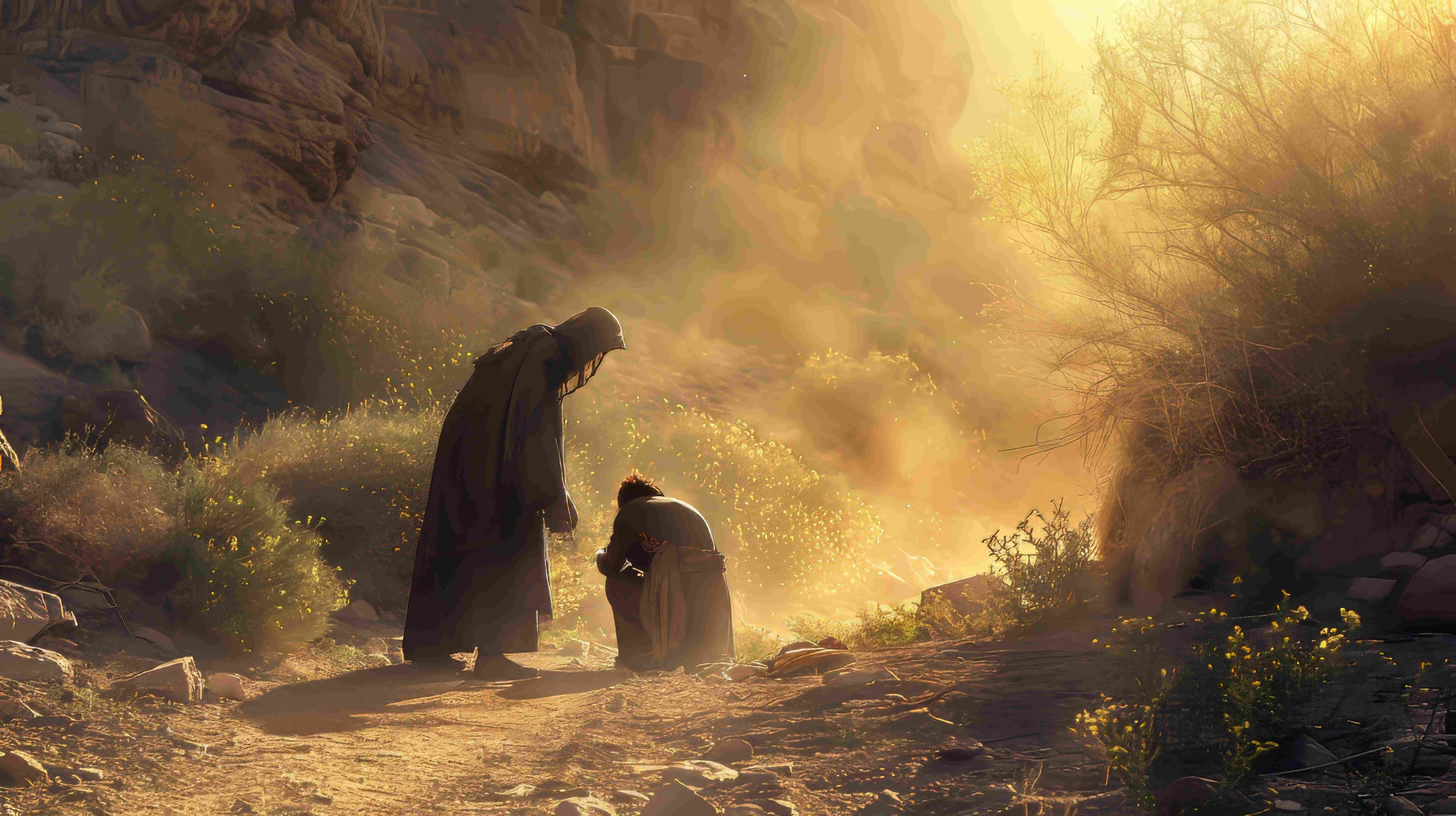
Who is our neighbour? The answer depends on who you ask. A dictionary definition will tell us that a neighbour is someone who lives next door or near. But Jesus said, whoever is in need is our neighbour. In today’s parable, the Samaritan helped the man who was in need whereas the priest and the Levite didn’t. The reason why the priest and the Levite didn’t help the injured man was due to fear of ritual impurity, fear of danger. They chose religious rules over human compassion. The Samaritan, on the other hand, helped the injured man because he felt deep compassion for him. He chose to act as a true neighbour regardless of the animosity that existed between Samaritans and Jewish people.
Just like the parable, I remember reading two contrasting stories from some years ago. When an 87 year old lady who was living at the retirement home was in desperate need of CPR, the dispatcher insisted that the nurse perform CPR on the lady. In a 7 minute and 16 second conversation, the nurse refused to intervene. That decision to do nothing cost the resident her life. The company later made an official statement and said that the employee had wrongly interpreted company policy when she declined to offer aid.
On the other hand, a 21 year old Tomas Lopez, who was working as a life guard in Hallandale Beach, Florida, did exactly the opposite. When he saw a man drowning about 1500 feet beyond his assigned post. Without hesitation he jumped to action and helped save a man’s life. But that same day he was fired. Why did he get fired despite saving a man’s life? Due to liability concern. Because he had left his post vacant while helping someone outside his own section he had put swimmers in his own section at a potential risk. This sparked national outrage. The backlash became so intense that the company later admitted the firing was a mistake. They offered Lopez his job back and said it would review its policies. Tomas refused to return to his job, but he responded to him getting fired by saying in an interview, “I have no regrets. I would make the same choice again.” Unlike the nurse from the previous story, Tomas chose a human life over a line drawn in the sand. He chose a life over a rule. Although it cost him his job, the truth is, a job can be replaced, whereas a life cannot. One had followed the rule, and the other followed his heart.
Another possible twist to the plot is the possibility of danger. This man who is half dead could have been a set up, an actor working with the thieves, since this was a popular route for the thieves. This possibility would have been in the mind of the people, just like we would be mindful of pickpockets in crowded places from popular destinations like Paris or Rome. So this possible scenario would have prevented or at least made many reluctant to help a man in need.
Yet, as Jesus taught us the new commandment: Love one another as I have loved you! Loving someone and showing compassion requires taking a risk, opening oneself up to vulnerability
When do we feel most vulnerable? I find it difficult revealing the sources of my insecurities, pains and fears to someone. Showing our wounds or our weakness to someone can be one of the most humbling things we can do. And it can make us feel very vulnerable. The word vulnerable comes from latin vulnere which means to wound, injure or harm. When we are wounded, we instinctively cover up our wounds. The only people we will show our wounds to are people we trust. Children would run to their mom or dad, show their wounds and cry. Another person they will reveal their wounds are the trusted medical professionals who can treat them and help them heal. Jesus is our divine physician who is capable of healing all our wounds. Often instead of revealing and entrusting our wounds to Christ, we cover up our wounds. Instead of running to God, we may run to self-soothing behaviours and turn to our addictions. I think we need to remind ourselves that Jesus willingly chose to suffer for us and the wounds that He suffered for us became the sources of our healing. In the words of Prophet Isaiah (53:5) we find, “He was wounded for our transgressions, crushed for our iniquities; upon him was the punishment that made us whole, and by His wounds we are healed.”
When Jesus appeared to His disciples after He rose from the dead, He still had His scars. I am sure one of the first things the disciples noticed were His scars. The doubting Thomas said, “unless I see the mark of the nails in his hands, and put my finger in the mark of the nails and my hand in his side, I will not believe.” So, when Jesus returned, Jesus revealed His wounds and asked Thomas to touch them and see it was Him. Through those scars Thomas’ doubt was healed from doubt and returned to faith! Yes Jesus wears His scars as a badge of honour!
Back on February 22, 1931, when Jesus appeared to Sr. Faustina and He told her to spread the message of God’s mercy. Jesus instructed St. Faustina to paint the vision of His Divine Mercy, emanating red and pale rays from His heart, with the inscription “Jesus, I trust in you,” at the bottom. The red ray stands for His blood, and the pale ray stands for the water that justifies souls. I am pretty sure you are all familiar with the image of Divine Mercy. From the wounds of Jesus flows His Divine Mercy and love, His sacrificial love the source of our healing. If you trust in God’s mercy you will never ever be turned away. By definition, mercy is God’s unconditional forgiveness, compassion and love, reserved for people like you and me who do not deserve it. All you have to do is trust. Trust is all you need!