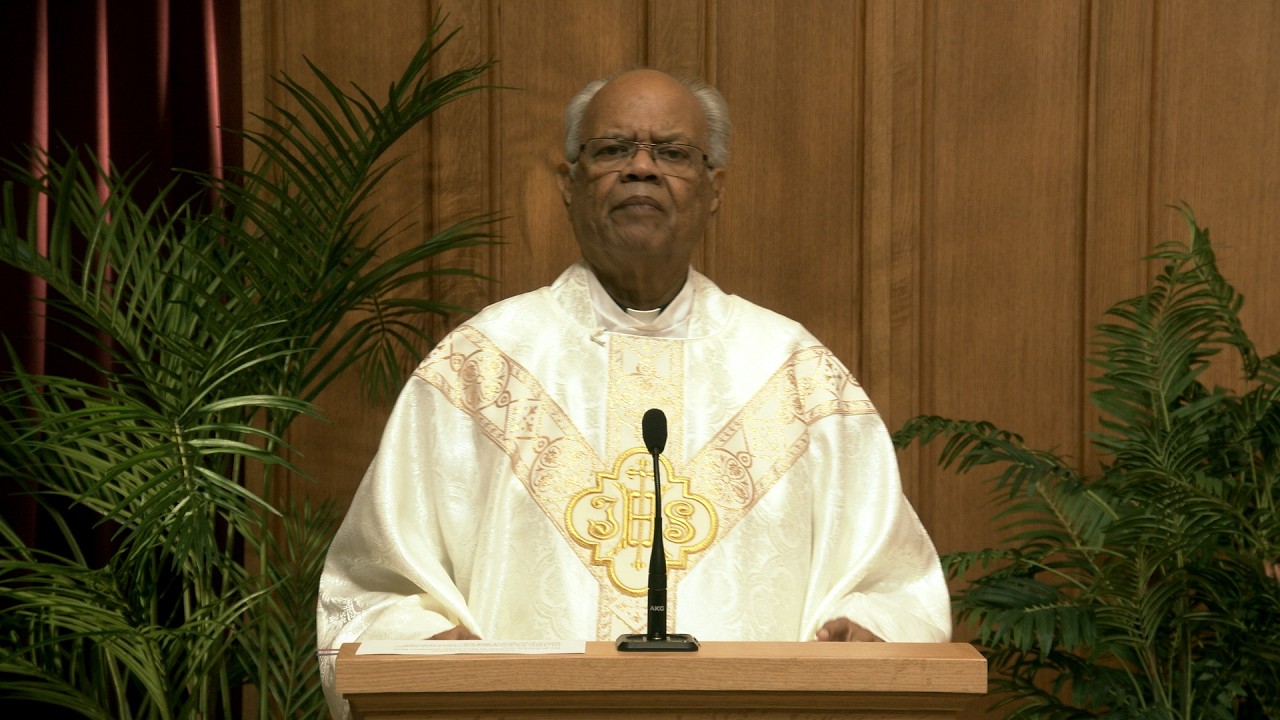


St. Augustine: The Doctor of Grace – Msgr. Robert Nusca
The ‘Doctor of Grace’ was born in Thagaste, Numidia (modern-day Souk Ahras, Algeria) on Nov. 13, 354 to St. Monica, who was deeply committed to the faith, and to Patricius, a minor Roman official and pagan, who converted to Christianity just before he died.
Brilliant from the outset, St. Augustine became a professor of rhetoric. In the following years, he underwent a profound conversion, and was baptized by St. Ambrose of Milan at the age of 32. Three years later he was ordained a Priest, and in 395 ordained a Bishop.
He died on this day, August 28th in the year 430, in the city of Hippo, North Africa.
“Our Hearts are Restless Until They Rest in Thee O Lord.”
St. Augustine was a great Bishop, teacher, pastor, and exegete who wrote commentaries on the Psalms, the Book of Genesis, and the Gospel of John. He was a great preacher who left us many sermons, a witness and defender of the faith, but also a great organizer and founder of monastic and religious communities. He remains for us a spiritual beacon whose voice spans the centuries.
Artistic depictions of St. Augustine holding a flaming heart in his hand, remind us of the ardent love for God that permeates his writings and spirituality. And at the same time, the image stands as a powerful symbol of the restlessness of the human heart.
For as he writes in The Confessions:
Our hearts are restless until they rest in Thee O Lord.
What a powerful and relevant message for our own time.
In addition to his contribution to theology, his writings express profound psychological insights, as we see in The Confessions and the observations that he makes regarding human memory, and the inner conflict within the human heart.
St. Augustine speaks of his own regret for not having drawn closer to God earlier in his life. In The Confessions, he writes:
Late have I loved you, O Beauty ever ancient, ever new, late have I loved you! You were within me, but I was outside, and it was there that I searched for you . . . You were with me, but I was not with you.