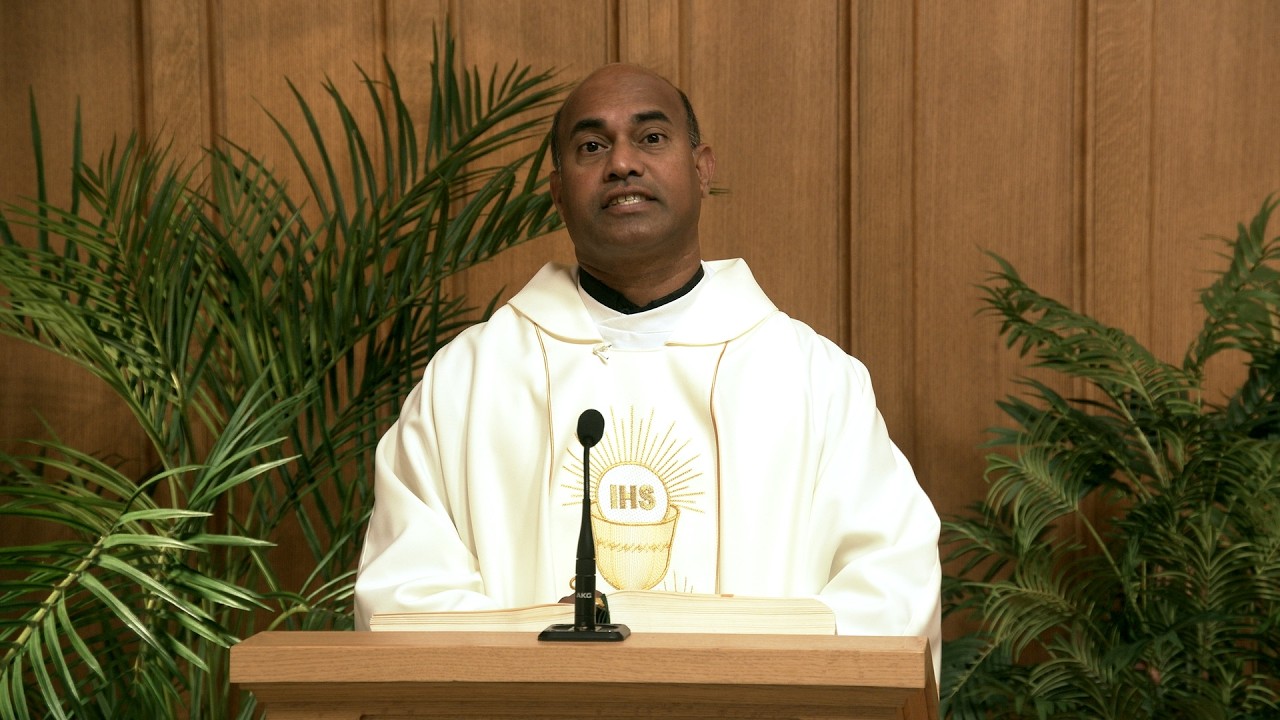


NOVEMBER 3, 2026 FATHER ROSHAN LOY D’SOUZA CSC
Human nature has a beautiful mystery. Those who have less often understand the value of giving more deeply. When life has taught us what it means to struggle, we become more sensitive to the struggles of others.
A person with little may still offer a warm meal, an open door, a listening ear, or a simple smile. True generosity does not begin with abundance. It begins with a heart that recognizes another person’s dignity.
Sometimes the richest people are not those who possess the most, but those who have learned that what we share with love is never really lost. It becomes our blessing. A meaningful life is not measured by what we possess, but by how willing we are to give, welcome, and make room for others.
Today’s readings invite us to look at our hearts and ask, “Have I made room for God and for others?”
In today’s first reading, Saint Paul presents Jesus as the perfect example of humility. Though Christ was in the form of God, He did not cling to His privileges. Instead, He emptied Himself, became a servant, and humbled Himself even to death on the cross. Christian greatness is found in humility and service.
Our world often tells us that greatness means being noticed, having authority, receiving recognition, or being ahead of others. Jesus gives us a completely different vision. He teaches us that the true greatness means being willing to serve.
In our parish, family, workplace, or community, there are many opportunities to practise this humility. Sometimes, we want people to recognize what we have done. Sometimes, we feel hurt when our contribution is overlooked. Jesus invites us to serve, not because everyone will notice, but because love itself is our reward.
Do not be afraid to humble yourself in love. God sees the service that others may never see, and notice where Jesus’ humility leads. Therefore, God also highly exalted Him. When we faithfully serve God and others, God knows our hearts.
In the gospel of the day, Jesus tells the parable of a man who prepares a great banquet and invites many people. But when the banquet is ready, the invited guests begin making excuses. One says he has bought a field. Another says he bought five pairs of oxen. Another says he has married and can not come.
Notice something important here. The banquet was ready, but they were too occupied to attend. The tragedy was not that they were doing evil things. A field is not evil. Work is not evil. Family’s not evil. The problem was that good things had become excuses for refusing God’s invitation.
The master then sends his servants into the streets, and brings in the poor, the crippled, the blind, and the marginalized. Never become so busy with gifts of life that you forget the giver of life.
How often do we say, “I’m too busy”? Too busy to pray, too busy for Sunday Mass, too busy to visit someone who is lonely, too busy to forgive, too busy to serve, and too busy to notice someone who needs encouragement.
God’s invitation continues to come to us. The Eucharist itself is a banquet. Every Mass is an invitation. “Come. For everything is ready.” The question is not whether God is inviting us. He is. The question is whether we are willing to accept His invitation.
Bringing the readings together, the first reading shows us the attitude with which we should come to God’s banquet: humility. The gospel shows us the danger that can keep us away: distraction and excuses.
Jesus emptied Himself for us. Therefore, we are called to empty ourselves of pride, selfishness, resentment, and excessive attachment. Today, let us pray for three graces: the grace to humble ourselves, the grace to recognize God’s invitation, and the grace to make room for others.
The psalm gives us our response. “I will praise You, Lord, in the assembly of Your people.”
May we never be so busy that we miss God’s banquet. May we never be so proud that we refuse to serve. And may our lives become an invitation to others, a place where people experience the welcome, mercy, and love of Christ.
Amen.