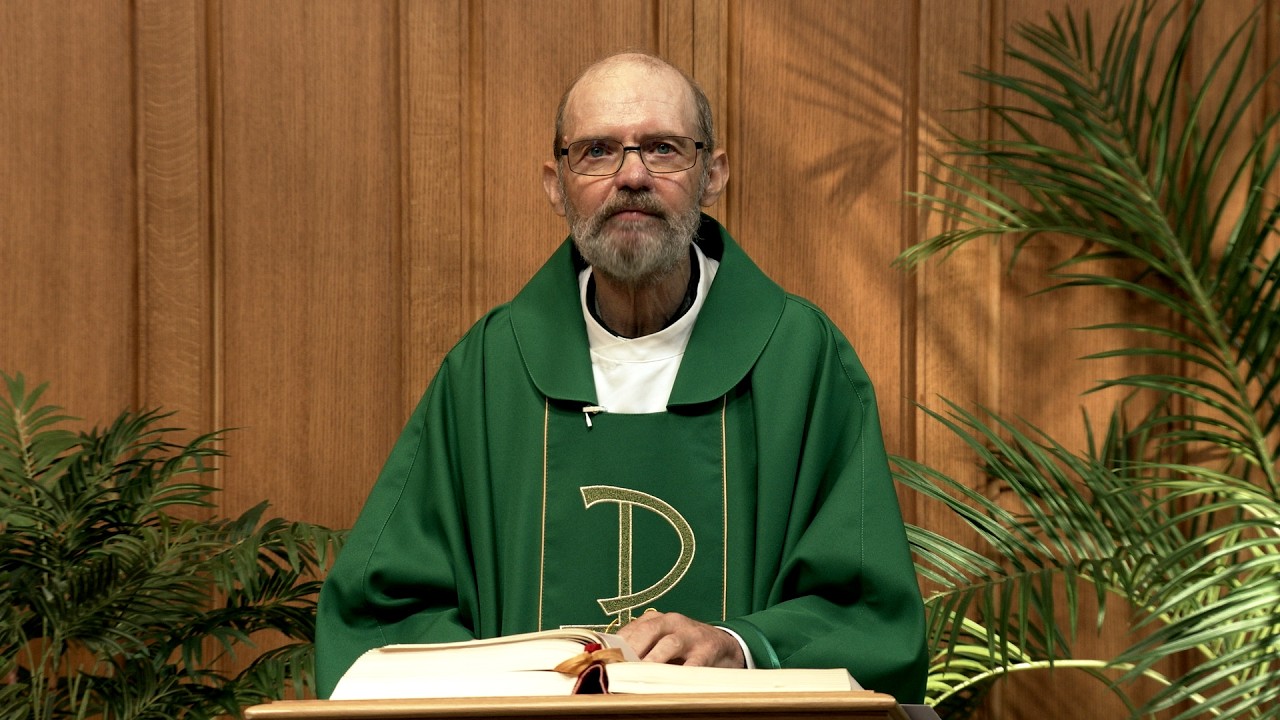


NOVEMBER 10, 2026 FATHER JOHN BERTAO
Perhaps you noticed that both the first reading from the letter of Saint Paul to the Gospel, they all talk about service. Service to others. The kind of service that is not an obligation, but the kind that make a connection to someone else, or, ultimately, to one person, and then to God.
For example, in the first reading, and I quote: “You must say what is consistent with sound doctrine, namely that older men should be temperate, dignified, self-controlled, sound in faith, love, and endurance.” End quote.
I could not help but think about my dad. From my point of view, he lived all of the above without fail. He was a great example to me, and to the many people he came across, both family, friends, and work colleagues.
Do you know of someone who is perhaps like Saint Paul? Like Saint Paul describes in the first reading. If so, good for you. You should maybe tell them that you’re impressed with them.
See, I know that if I was to tell my dad the same, he might be embarrassed, and just brush it off, because he didn’t like to have compliments paid to him. He was very humble. Yet, it’s important that those who live the Gospel values are encouraged at any possible way. God will do the rest as a reward when the time comes for what we do here on earth.
And in the Gospel, the topic of slavery is hinted at, although we don’t have slavery as they did in the old days. We do have some people who still treat others as slaves. Like those who work very hard for little pay, sometimes just to make ends meet.
Whatever we do in life can lead us to ask the question: Are we ready to give the Lord your best. Are you ready to give the Lord your best, regardless of what it might cost you?
Perhaps we are like the labourers in Jesus’ parable who expected a special favour and reward for doing, or going the extra mile. How unfair for the master to force his servant to give more than was expected. Don’t we love to assert our rights?
Sometimes we might just say, “I will give only what is required of me, and no more! And that’s it.” Is it something done with love, or obligation, that you feel good about instead of being forced to do it? Lacking commitment. In other words, are we called to serve God and neighbour selflessly and generously?
Jesus used his parable of the dutiful servant to explain that we can never put God in our debt or make the claim that God owes us anything. Because he doesn’t. That’s a human thought, and not God’s thought. We must regard ourselves as God’s humble servants.
Just as an example, as we hear it said, “Jesus came not to be served, but to serve.” Service of God and neighbour is both a voluntary or free act and a sacred duty. One can volunteer for service, or be compelled to do service for one’s country, or one’s family, when special needs develop.
For example, when a young mother gives birth, and the husband takes time off work to help around the house, to alleviate her burden. Or an elderly individual who needs help with groceries, or work around the house. That’s giving from the heart, not for pay. Just to name a few, and I’m sure you can think of one or two yourself.
Likewise, God expects us to give him the worship and praise with—that is due from us to that person. Praising God is helping others from the heart. In return, he gladly accepts a freewill offering our lives to him and his service to us.
What does it mean? Let me explain. You see, what makes our offering pleasing to God is the love that we express in every act of self-giving. True love is sacrificial, generous, and selfless.
As I stated before, serving with love makes a connection. One that connects us with the other person in a beautiful and safe way, and that brings both the one being served, and the one serving, to a level of peace that is much needed today. It’s a service in the name of God. It’s a self-giving in the name of the Lord.
Give it a try if you can possibly one day, because, trust me, I’ve done it in my life, and I really get so much out of it. Not for pay, not for pleasure, but to serve God to those who need. It brings me peace. It brings peace to the person who’s receiving it. Not embarrassment, but peace.
And speaking of peace, today the Church celebrates the Memorial of Saint Leo the Great, who lived in the fifth century. Those were very hard times for the Church, due to the barbarian armies that were attacking Christians in many places. Also, within the Church, some people were spreading errors about the faith.
I learned that Saint Leo was one of the greatest popes the Church has ever known. Also, I read that he was absolutely unafraid of anything or anyone. Self-conscious? No. He was fully of God’s grace. Full of hope and faith. He had great trust in the help of the first pope, Pope Saint Peter the Apostle. And the other popes. And especially our Lord and saviour.
At one point a large army of barbarians called the Huns came to attack Rome. All the people were filled with great fear. To save Rome, Saint Leo rode out to meet the fierce leader, Attila the Hun, as you’ve heart. I’m sure that we’ve heard it in some other areas as well. The only weapon he had was his great trust in God.
When they met, something wonderful happened. Attila, the cruel pagan leader, showed the Pope great honour. He made a treaty of peace with him. Attila said afterward that he had seen two mighty figures standing by the Pope while he spoke. It is believed that they were the great apostles Peter and Paul, that they had been sent by God to protect Pope Leo and the Christians.
Indeed, great trust in God and serving him with humility and great love. A great connection made centuries ago, and still available to each one of us today. A gesture of peace, love, and most of all, in God and trust in him. Give it a try.
I’ll close with a final prayer.
Lord Jesus, fill my heart with love, gratitude, and generosity. Make me a faithful and zealous servant for you. May I generously pour out my life in loving service for you and for others, just as you have so generously poured out yourself our of love for me. Amen.