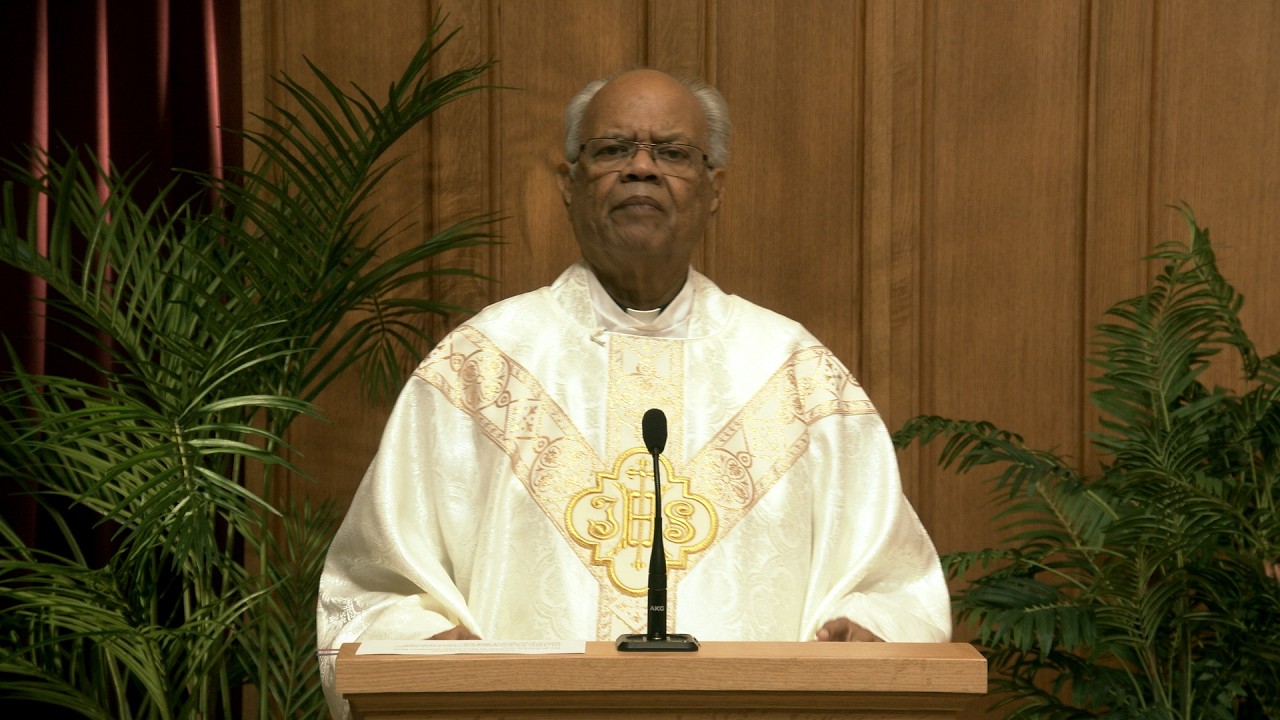


AUGUST 10, 2026 BISHOP GARY GORDON
My dear family, sisters and brothers in Christ, just to leave a brief reflection on this this Justice Day for Prisoners, but also the Feast of Saint Lawrence.
No doubt when the Emperor asked Lawrence to bring the riches of the Church, Lawrence was not hard pressed to gather together the richness of the Church, which was the poor of Rome.
And in that multitude of the poor of Rome, there would not doubt have been people who had been in prison, or people who perhaps should be in prison. They were indeed the marginal and the broken of Rome.
Lawrence followed Christ in looking after the poorest of the poor.
And so today, on this Justice Day for Prisoners, we reflect on the poverty that crime causes. It is not just people in prison that serve time. Victims serve time also.
The victims of crime, the communities where crimes are committed, and the families of the victims, and the families of prisoners, are all serving time because of the profound brokenness that crime has caused in a person’s life, in a family’s life, and in a community’s life.
Justice is something that may indeed be difficult to achieve sometimes. But what we are invited to is something called “restorative justice.” How do we restore what is broken?
How is there a possibility of restoring the victims who have suffered so grievously from crime? How do we restore the families of inmates who often serve a profound sentence because of poverty, because of separation. And how is there a restoration of those who have committed the crime? A restoration as children of God.
Today, we think about many things. But one of the great gifts that Jesus Christ has revealed to us is mercy, is forgiveness. But this is not cheap grace. This is not simply a pat on the head.
Real mercy and real forgiveness means a conversion, a changing of heart. And it is a change of heart for everyone touched by crime.
Certainly for the prisoner who has committed the crime, a change of heart, a change of seeing the world and looking out upon the world perhaps not with hatred, and anger, and bitterness, but rather with love.
A change of heart also, as difficult as it may seem, for victims. To remain in bitterness, and anger, and pain, is not way to live. In fact it is a poison that can slowly destroy us.
Restorative justice is also a conversion for victims and their families to allow the healing of Jesus Christ, which is the great grace that chaplains in prisons, and volunteers in prisons, that the Church brings.
A healing for victims. A healing for the families. So that their hearts are no longer gripped by pain.
Pain never produces good fruit, love always does. But I’m not saying this is an easy road to reconciliation. It is a challenging road, and it is a road that needs a constant tenderness, a constant encounter of love, a constant meeting between individuals in respect and understanding.
And perhaps maybe the most precious gift that can take place with victims of crime and with their families, and also with prisoners, who will listen. Who will listen to the brokenness that exists? That has caused this crime? Who will listen to the suffering of the human heart?
And so, as we pray today, we know that our God listens. This is our faith. God always hears the cry of the poor. God hears the cry of those who need justice. God hears our cry.
We will offer our prayers, our petitions, confident that God hears and God does answer. And has answered mightily and beautifully down through the millennia.
We see it all the time in scripture. God does hear. God does listen. And God does produce new fruit and love, even in the midst of contradiction, and of pain, and of suffering, the mystery of the cross, and the resurrection.