
APRIL 26, 2026 CARDINAL THOMAS COLLINS
Today is Good Shepherd Sunday. And for this past week, we’ve been
thinking of the different ways in which people are called to serve in
different vocations within the Church.
Today, I’d just like to reflect upon the vocation to which the Lord God
has called me, personally, in my life. So many people say, “I see you’re a
priest. Are you a Jesuit? Are you a Dominican? What order do you
belong to? Are you a Franciscan?”
I say, “No, I’m a Diocesan priest.”
I could say, “I belong to the Order of the Good Shepherd,” but I never
actually say that. Oh, I’m saying it now. But I’m a Diocesan priest.
I was ordained for the Diocese of Hamilton by my bishop, Bishop
Reding, on May 5th, 1973. I served in that capacity as a priest of
Hamilton for 24 years. Then I was called to follow the Good Shepherd
in another, fuller way as a bishop.
There are some priests, sometimes they’re called “secular priests.”
That means they’re immersed in the world. They are there with their
people.
As the Lord says, “The flock hear the voice of the Shepherd, and they
follow him.” They care for them. They care for the flock entrusted to
them. “I came that they may have life and have it abundantly.”
That is the mission which the priests of the Diocese are called to follow
in their life as the servants of the Good Shepherd, Christ our Lord.
They’re directly related to a bishop. They don’t belong to a religious
order. They do not elect their superior. They’re ordained by their
superior.
Obviously, one of the reasons I became a Diocesan priest is that I
wanted the one who gives me my orders, like go to this parish, go to that
parish, to give me my orders.
The same one who ordained me, gave me my holy orders, is the one who
then gives me my orders. It’s a direct connection. And you’re sent by the
bishop. I have been blessed in my life with wonderful priests of my
Diocese.
I think of, well, so many. Father Nunen, Father Ryan, Father Newstead,
so many. My pastors and my spiritual directors, confessors, teachers.
They touched my heart when I was growing up. When Father Newstead
said to me, “You should think about becoming a priest,” boy, that sure
had a lot of weight.
Because he’s such a holy priest.
I have had wonderful bishops.
Bishop Ryan, Bishop Reding, Bishop Tonnos. True shepherds of the
flock.
You know, the people, when they hear the voice of Christ, and these
ones who really cared for the flock entrusted to them. That’s why a
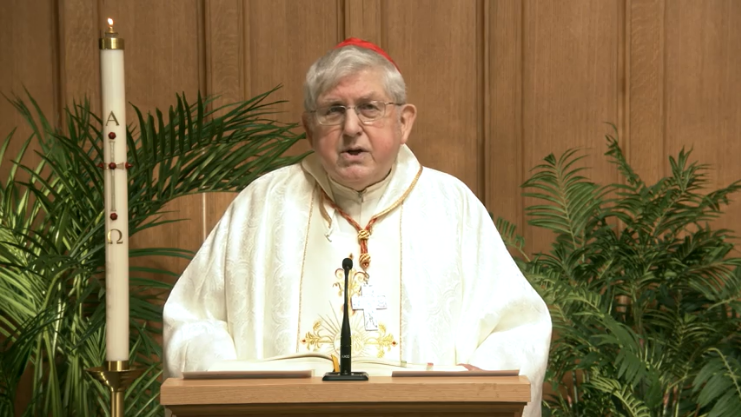
bishop has this shepherd’s staff when he’s in formal situations.
You can kind of imagine mine here. This is a formal situation.
It reminds the bishop you can care for the flock, care for those entrusted
to your care.
That is one of the vocations that we think of on Good Shepherd Sunday
and during this week. It is the vocation of the Diocesan priesthood.
They’re essentially sent for a particular territory under the care of a
bishop.
Now, it turns out, in my 24 years as a priest of Hamilton, I was only in
Hamilton for two of them. Because my bishop sent me to study in Rome.
He sent me to a seminary to teach parish priests, to teach them to come
and serve the Lord in the priesthood.
So, it may vary, different things, you know? You may have different
types of missions given to you. But you’re a priest of that community.
You are united with your bishop. You pray that your bishop and you and
all the others will be faithful in fulfilling the mission committed to them.
During this week, we pray for all of those who are called to particular
ministries. And we all are, in different ways.
But we think particularly of the vocation to priesthood, religious life, the
diaconate, many different married vocations. Many other different calls
within that each of us are called to.
The ultimate vocation is the call to baptism and confirmation, to serve
the Lord with gladness, to come before him singing for joy. That’s the
one that we will celebrate and think of most when we come before the
Lord at the end of time.
Until that moment, we are celebrating, we hear his Word, and we’re
encountering the Lord. We will meet on the day of our death right here
in the holy sacrifice of the Mass.